




BARRISTER OVERVIEW

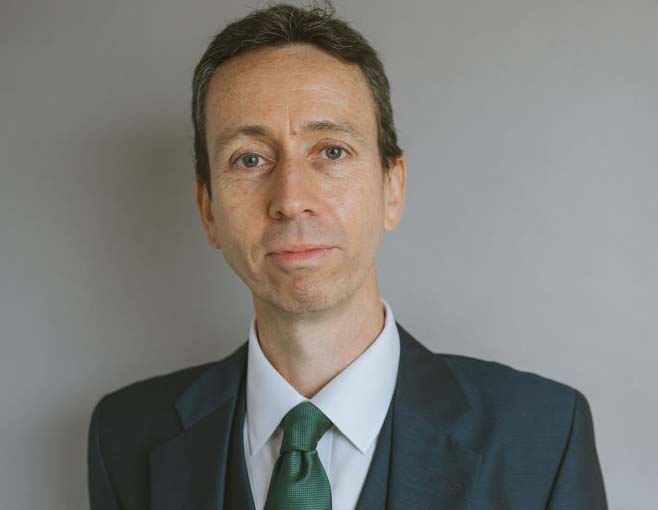
Matthew White, Head of Chambers, specialises in personal injury litigation. He is ranked in Band 1 in Chambers UK and Tier 1 in The Legal 500 guide. He is described by clients as the “master of fine detail” and “forensically thorough”.
With over 25 years’ experience, Matthew has expertise in serious injury claims, particularly brain and spinal injuries, highway law, clinical negligence resulting in serious injury or death, industrial diseases (particularly asbestos), pain litigation, and inquests, as well as the more routine employers’ liability, public liability and road traffic claims.
In addition to personal injury work, Matthew has specialist expertise in highway law outside of the injury context, and in nuisance claims, particularly those involving invasive species.
Reported cases:
- Barlow v Wigan [2021] QB 229. Success for the claimant at the Court of Appeal in a personal injury claim concerning the creating of highways maintainable at public expense; path was highway maintainable at public expense because of when it was constructed.
- Young v Merthyr [2009] PIQR P23. A little old now, but worth mentioning alongside Barlow, because Young remains the modern restatement of the law that a landowner owes no duty in respect of defects on highways that are not highways maintainable at public expense, which Matthew successfully argued on behalf of the Defendant.
- Davies v Bridgend County Borough Council [2024] UKSC 15; [2024]2 WLR 1237. Success for the defendant council at the Supreme Court in a nuisance claim concerning the encroachment of Japanese knotweed.
- Jenkinson v Robertson [2022] 4 WLR 46. Overturned a finding of fundamental dishonesty on appeal on behalf of a claimant, inadequate notice having been given.
- Brown v South West Lakes [2022] QB 464. Success for the defendant in the Court of Appeal: an occupier does not owe a duty of care to protect drivers from dangers off the highway.
- Shelbourne v Cancer Research [2019] PIQR P16. Employer not liable for assault by one employee on another at an office Christmas Party.
- McDonald v (1) Department for Communities and Local Government; and (2) National Grid Electricity Transmission PLC [2013] EWCA Civ 1346; [2014] PIQR P7. Successfully resisted claim at trial and in the Court of Appeal arising from exposure to asbestos in the 1950s. The claimant succeeded against the defendant that Matthew did not represent at Court of Appeal and Supreme Court level based on the Asbestos Industry Regulations 1931.
- TR v Devon [2013] EWCA Civ 418; [2013] PIQR P19. Defendant driver settled a claim brought by an injured passenger, then successfully pursued the highway authority on the basis that the accident had been caused by a pothole (edge rutting/ haunch failure). Useful authority for the proposition that a highway authority can use a version of the Bolam test in relation to the care that they apply to highways.
- McKie v Swindon College [2011] EWHC 469 (QB). Successfully argued that a reference provided by defendant in relation to claimant was negligent and caused significant loss.
AREAS OF EXPERTISE
Matthew is a specialist personal injury barrister who deals with all aspects of personal injury litigation, acting for both claimants and defendants. He aims for a roughly equal split between claimant and defendant work, taking the view that it makes for a more rounded and better lawyer to have insight into the thinking of the opponent.
With over 25 years’ experience, he has considerable expertise in highway law, industrial diseases (particularly asbestos), pain litigation, and inquests. He also deals with the more routine employers’ liability, public liability and road traffic claims. He has been described by clients as “forensically thorough” with “fantastic attention to detail.”
Matthew spent 20 years on the Attorney General’s panel of counsel to the Crown, including being on the A-panel of most senior counsel since that system was introduced outside of London, therefore trusted to deal with the most complex government cases. He did not re-apply to the panel having become Head of Chambers in April 2022.
He regularly advises and represents clients in catastrophic injury claims, including in particular traumatic brain and spinal cord injuries, and serious orthopaedic or amputation cases.
Matthew handles the full range of industrial disease cases from mesothelioma and asbestos related claims to other respiratory diseases, cancers, noise induced hearing loss, work-related upper limb disorders, dermatitis and occupational stress, including claims where there is crossover between personal injury and employment law.
He has a particular interest and expertise in matters of highway law and is “go to“ counsel for a number of local authorities in relation to the questions of when a way is a highway, when a highway is a highway maintainable at public expense, and the effect that these issues have on duty and standard of care.
Matthew enjoys common law claims, and occasionally deals with some of the more obscure areas of law that arise infrequently.
He routinely advises on and drafts complicated schedules of loss.
He has a particular specialism in dealing with claims for significant pension loss, whether in money purchase, final salary, or career average pension scheme situations, or, as is usual, a mixture of schemes. He is co-author of the Personal Injury Bar Association Guide to Pension Loss Calculation (Rowley QC & White, 2020) (extract here), the chapter in Facts & Figures on pension loss, and he lectures on the topic. He has put a video explanation of the calculation of pension loss in personal injury claims here.
Immediately after the release of the 8th edition of the Ogden tables he presented live online talks on how to use the new additional tables. They were recorded and are now online here.
Matthew has prepared a special damages calculator, which can be used from our website here. It allows for all changes in the special account rate over time. Read more here.
Matthew advises and represents clients in catastrophic injury claims, particularly traumatic brain and spinal cord injuries, and serious orthopaedic or amputation cases. He is used to working with teams of medical and rehabilitation experts to ensure the best outcome in such claims.
Most cases of this type settle at JSM, but Matthew is more regularly in court dealing with expert and interim payment issues in such cases (including the Eeles trap).
Recent cases include dealing with value in a >£10m birth injury claim, settling (liability and value) a >£10m claim for spinal injury arising from a road traffic accident, and a number of claims for life loss of earnings and significant care costs resulting from traumatic brain injury.
Matthew works for both claimants and defendants in relation to accidents at work and the liability of employers for their employees and others. He spent many years dealing with claims under 6-pack regulations and, following the coming into force of s.69 the Enterprise & Regulatory Reform Act 2013, now regularly deals with the status of the regulations and their impact on liability issues.
The types of work undertaken cover all of the ways in which employees sustain injury at work, including trips and slips, crushing injuries, repetitive strain and other work-related upper limb disorders, exposure to substances hazardous to health, assaults at work, defective work equipment, inadequate protective equipment, stress at work, and falls from height.
He has particular experience of claims involving vicarious liability, and successfully defended Shelbourne v Cancer Research UK [2019] EWHC842; [2019] PIQR P16 at first instance and on appeal (no vicarious liability for assault on dancefloor at office Christmas party).
Matthew has particular experience and expertise in matters of Highway Law, and regularly advises (particularly highway authorities) on such claims including ordinary trippers/ slippers, winter maintenance cases, and cases in which the status of the location (and whether it is highway or highway maintainable at public expense) is vital.
Matthew also regularly deals with accidents involving an occupier’s liability to the public (such as claims in supermarkets, shopping centres, public parks and the like).
He enjoys what he terms “ordinary common law disputes” including incremental extension of the Caparo v Dickman test for the imposition of a duty of care, claims in negligence/ nuisance arising out of flooding (whether injury is sustained or not), and claims that can be put on a contractual footing.
Matthew advises and litigates for both claimants and defendants, handling the full range of industrial disease cases including mesothelioma and other asbestos related claims, other respiratory diseases, cancers, noise induced hearing loss, work-related upper limb disorders, dermatitis and occupational stress.
He represented the successful employer in the well-known asbestos case McDonald v National Grid and DCLG in which Matthew was successful at first instance and in the Court of Appeal (against silks for both other parties), the Claimant’s onward appeal to the Supreme Court against the occupier of power station premises, the other defendant, being successful under the Asbestos Industry Regulations 1931.
He appreciates that often time is of the essence in cases where terminally ill or elderly claimants seek a speedy solution to their claims.
As a junior Matthew dealt with all costs issues ancillary to personal injury and clinical negligence practice, from routine budgeting and budget variation hearings to advising on and litigating issues that arise in relation to qualified one-way costs shifting, fundamental dishonesty, wasted costs, the move from fixed to assessed costs and suchlike.
Matthew has a particular interest in “pain cases”: those involving conditions of uncertain aetiology and/or subjective pain without commensurate physiological basis. Recent cases have included substantial (£1m+) claims arising from functional neurological disorders, functional cognitive disorder, fibromyalgia, chronic fatigue syndrome (ME), and complex regional pain syndrome. He has recent experience in sub-£1m claims where chronic pain syndrome and somatoform pain disorder have been relevant diagnoses.
Matthew deals with high-value clinical negligence claims for claimants and defendants. During 20 years on the Attorney General’s panel of counsel to the Crown he dealt with various claims arising from clinical negligence in a military context. More recently he undertakes a wide range of work, cases shortly before this website entry was written including:
- Whilst still a junior, acting for a claimant in a claim against an NHS trust arising from a failure to diagnose hydrocephalus in infancy, settled for high 7-figures plus substantial periodical payments.
- Defending a 7-figure claim arising out of an iatrogenic leg injury in infancy.
- Below knee amputation flowing from failure properly to treat a diabetic leg ulcer.
- Brain injury arising from infection arising due to negligent failure to avoid stoma.
Matthew also deals with inquests in the clinical negligence context, and advises on claims under the Human Rights Act.
Matthew successfully defended Young v Merthyr Tydfil CBC [2009] PIQR P23: a more modern restatement of the principle in Gautret v Egerton (1866-67) LR 2 CP 371 and McGeown v Northern Ireland Housing Executive [1995] 1 AC 233 that, in relation to nonfeasance (i.e. doing nothing, as against misfeasance: positively creating a danger), no duty of care is owed to a person on a highway that is not a highway maintainable at public expense because presence on the highway is as of right rather than as a visitor. He has run the McGeown defence successfully a number of times subsequently.
More recently he was successful for the claimant in Barlow v Wigan MBC [2021] QB 229 in which the Court of Appeal suggested that the McGeown defence is only available if a person is only lawfully on a defendant’s land because of the existence of a public right of way.
Matthew has a particular interest in cases involving questions of whether a way is a highway, whether a highway is a highway maintainable at public expense, and the legal implications of those decisions, and is ‘go to’ counsel for a number of highway/ local authorities on such matters.
The issue of whether a way is a highway, and for what kind of traffic, has implications not only in relation to duty of care, but also in relation to whether the public are entitled to use and/or seek to clear or improve a way, and is therefore of particular interest to landowners and interest groups seeking to increase available highways, and Matthew deals with these issues in contexts other than personal injury litigation, including public enquiries.
Matthew regularly lectures on highway law issues, over the years having been invited to lecture amongst others the Chartered Institute of Highways and Transport and the Institute of Public Rights of Way. His various pieces on “ways, highways and highways maintainable at public expense” on the Chambers website have been driving traffic for well over a decade. He has created a podcast with fellow barrister Jonathan Lindfield dealing with these issues that is here.
His complimentary interests in highways and nuisance has led to him acting in a number of highway trees cases.
Matthew undertakes claims concerning accidents caused by the state of the highway, including tripping claims and claims where the state of the highway results in loss of control of a vehicle. The best-known example of the latter type of case is TR v Devon [2013] EWCA Civ 418; [2013] PIQR P19 which deals with the status of national guidance in highway maintenance and shows that a highway authority can point to what other highway authorities do as evidence that it takes reasonable care: a highway authority version of the Bolam test. Matthew’s highway work includes claims arising out of slippery highways, and he is used to handling SCRIM test data. He deals with claims concerning allegations of failure of winter maintenance when a highway is rendered dangerous by ice or snow.
Matthew has undertaken many substantial inquests (generally 1 to 4 weeks in length), invariably Article 2 inquests concerning public authorities. He has dealt with many death in custody inquests.
Routine shorter inquests include those that tend to precede a civil claim, including workplace accidents, road traffic accidents and death in (or having left) a clinical setting.
Matthew also deals with claims for damages for breaches of the Human Rights Act following death, including victim status, breach of article 2 (and sometimes 3) and the value of claims.
Matthew spent a year working almost exclusively on the BSE Inquiry early on in his practice. He has an appreciation for the practicalities and politics of public inquiries, and is used to dealing with hearings which attract media attention.
Matthew is a skilled barrister and accredited mediator with over 25 years of experience in personal injury and clinical negligence litigation. He is highly ranked in the legal directories and is described as having a “fantastic attention to detail” as well as “covering all issues with a great degree of knowledge.“ He qualified as a mediator in 2014.
Areas of mediation
- Personal Injury
- Nuisance
- Highways/ rights of way
Matthew’s approach to mediation
Matthew brings a pragmatic approach to a mediation allowing parties to remain in control of the dispute and reach a settlement which is acceptable and cost effective to all.
Matthew aims to draw on his wealth of legal experience to assist the parties to reach an acceptable outcome without the need to go to trial / tribunal, avoiding the stress, uncertainty and escalating costs that can be involved in litigation.
He takes the view that whilst most personal injury cases can be resolved with a joint settlement meeting attended by the parties’ representatives without the need for a mediator, there are cases in which a mediator can provide valuable assistance. Examples of such cases include multi-party claims, and in particular claims in which there is a particular emotional issue between the parties such as where the defendant continues to employ the claimant. Matthew also takes the view that the parties can sometimes be assisted by a mediator in settling personal injury litigation because the mediator is able to focus each party’s attention on the cost/ risk benefit of proceeding.
The County Court in Bristol sometimes orders early mediation in personal injury claims, and Matthew is one of the barristers in Chambers who is able to conduct such mediation.
In addition to personal injury work, Matthew has become one of the leading barristers in nuisance claims, particularly those involving invasive species. He has represented a number of local authorities and large land-holders for a number of years in relation to claims in respect of the encroachment of Japanese Knotweed.
Matthew successfully represented the defendant in the Supreme Court decision in a Japanese knotweed case (Davies v Bridgend County Borough Council [2024] UKSC 15). You can read the full case summary here.
He deals with claims involving property damage caused by trees, including highway trees.
Personal Injury
Matthew is a specialist personal injury barrister who deals with all aspects of personal injury litigation, acting for both claimants and defendants. He aims for a roughly equal split between claimant and defendant work, taking the view that it makes for a more rounded and better lawyer to have insight into the thinking of the opponent.
With over 25 years’ experience, he has considerable expertise in highway law, industrial diseases (particularly asbestos), pain litigation, and inquests. He also deals with the more routine employers’ liability, public liability and road traffic claims. He has been described by clients as “forensically thorough” with “fantastic attention to detail.”
Matthew spent 20 years on the Attorney General’s panel of counsel to the Crown, including being on the A-panel of most senior counsel since that system was introduced outside of London, therefore trusted to deal with the most complex government cases. He did not re-apply to the panel having become Head of Chambers in April 2022.
He regularly advises and represents clients in catastrophic injury claims, including in particular traumatic brain and spinal cord injuries, and serious orthopaedic or amputation cases.
Matthew handles the full range of industrial disease cases from mesothelioma and asbestos related claims to other respiratory diseases, cancers, noise induced hearing loss, work-related upper limb disorders, dermatitis and occupational stress, including claims where there is crossover between personal injury and employment law.
He has a particular interest and expertise in matters of highway law and is “go to“ counsel for a number of local authorities in relation to the questions of when a way is a highway, when a highway is a highway maintainable at public expense, and the effect that these issues have on duty and standard of care.
Matthew enjoys common law claims, and occasionally deals with some of the more obscure areas of law that arise infrequently.
He routinely advises on and drafts complicated schedules of loss.
He has a particular specialism in dealing with claims for significant pension loss, whether in money purchase, final salary, or career average pension scheme situations, or, as is usual, a mixture of schemes. He is co-author of the Personal Injury Bar Association Guide to Pension Loss Calculation (Rowley QC & White, 2020) (extract here), the chapter in Facts & Figures on pension loss, and he lectures on the topic. He has put a video explanation of the calculation of pension loss in personal injury claims here.
Immediately after the release of the 8th edition of the Ogden tables he presented live online talks on how to use the new additional tables. They were recorded and are now online here.
Matthew has prepared a special damages calculator, which can be used from our website here. It allows for all changes in the special account rate over time. Read more here.
Catastrophic Injury
Matthew advises and represents clients in catastrophic injury claims, particularly traumatic brain and spinal cord injuries, and serious orthopaedic or amputation cases. He is used to working with teams of medical and rehabilitation experts to ensure the best outcome in such claims.
Most cases of this type settle at JSM, but Matthew is more regularly in court dealing with expert and interim payment issues in such cases (including the Eeles trap).
Recent cases include dealing with value in a >£10m birth injury claim, settling (liability and value) a >£10m claim for spinal injury arising from a road traffic accident, and a number of claims for life loss of earnings and significant care costs resulting from traumatic brain injury.
Employers’ Liability
Matthew works for both claimants and defendants in relation to accidents at work and the liability of employers for their employees and others. He spent many years dealing with claims under 6-pack regulations and, following the coming into force of s.69 the Enterprise & Regulatory Reform Act 2013, now regularly deals with the status of the regulations and their impact on liability issues.
The types of work undertaken cover all of the ways in which employees sustain injury at work, including trips and slips, crushing injuries, repetitive strain and other work-related upper limb disorders, exposure to substances hazardous to health, assaults at work, defective work equipment, inadequate protective equipment, stress at work, and falls from height.
He has particular experience of claims involving vicarious liability, and successfully defended Shelbourne v Cancer Research UK [2019] EWHC842; [2019] PIQR P16 at first instance and on appeal (no vicarious liability for assault on dancefloor at office Christmas party).
Public Liability
Matthew has particular experience and expertise in matters of Highway Law, and regularly advises (particularly highway authorities) on such claims including ordinary trippers/ slippers, winter maintenance cases, and cases in which the status of the location (and whether it is highway or highway maintainable at public expense) is vital.
Matthew also regularly deals with accidents involving an occupier’s liability to the public (such as claims in supermarkets, shopping centres, public parks and the like).
He enjoys what he terms “ordinary common law disputes” including incremental extension of the Caparo v Dickman test for the imposition of a duty of care, claims in negligence/ nuisance arising out of flooding (whether injury is sustained or not), and claims that can be put on a contractual footing.
Industrial Disease
Matthew advises and litigates for both claimants and defendants, handling the full range of industrial disease cases including mesothelioma and other asbestos related claims, other respiratory diseases, cancers, noise induced hearing loss, work-related upper limb disorders, dermatitis and occupational stress.
He represented the successful employer in the well-known asbestos case McDonald v National Grid and DCLG in which Matthew was successful at first instance and in the Court of Appeal (against silks for both other parties), the Claimant’s onward appeal to the Supreme Court against the occupier of power station premises, the other defendant, being successful under the Asbestos Industry Regulations 1931.
He appreciates that often time is of the essence in cases where terminally ill or elderly claimants seek a speedy solution to their claims.
Personal Injury Costs
As a junior Matthew dealt with all costs issues ancillary to personal injury and clinical negligence practice, from routine budgeting and budget variation hearings to advising on and litigating issues that arise in relation to qualified one-way costs shifting, fundamental dishonesty, wasted costs, the move from fixed to assessed costs and suchlike.
Pain Litigation
Matthew has a particular interest in “pain cases”: those involving conditions of uncertain aetiology and/or subjective pain without commensurate physiological basis. Recent cases have included substantial (£1m+) claims arising from functional neurological disorders, functional cognitive disorder, fibromyalgia, chronic fatigue syndrome (ME), and complex regional pain syndrome. He has recent experience in sub-£1m claims where chronic pain syndrome and somatoform pain disorder have been relevant diagnoses.
Clinical Negligence
Matthew deals with high-value clinical negligence claims for claimants and defendants. During 20 years on the Attorney General’s panel of counsel to the Crown he dealt with various claims arising from clinical negligence in a military context. More recently he undertakes a wide range of work, cases shortly before this website entry was written including:
- Whilst still a junior, acting for a claimant in a claim against an NHS trust arising from a failure to diagnose hydrocephalus in infancy, settled for high 7-figures plus substantial periodical payments.
- Defending a 7-figure claim arising out of an iatrogenic leg injury in infancy.
- Below knee amputation flowing from failure properly to treat a diabetic leg ulcer.
- Brain injury arising from infection arising due to negligent failure to avoid stoma.
Matthew also deals with inquests in the clinical negligence context, and advises on claims under the Human Rights Act.
Highways & Rights of Way
Matthew successfully defended Young v Merthyr Tydfil CBC [2009] PIQR P23: a more modern restatement of the principle in Gautret v Egerton (1866-67) LR 2 CP 371 and McGeown v Northern Ireland Housing Executive [1995] 1 AC 233 that, in relation to nonfeasance (i.e. doing nothing, as against misfeasance: positively creating a danger), no duty of care is owed to a person on a highway that is not a highway maintainable at public expense because presence on the highway is as of right rather than as a visitor. He has run the McGeown defence successfully a number of times subsequently.
More recently he was successful for the claimant in Barlow v Wigan MBC [2021] QB 229 in which the Court of Appeal suggested that the McGeown defence is only available if a person is only lawfully on a defendant’s land because of the existence of a public right of way.
Matthew has a particular interest in cases involving questions of whether a way is a highway, whether a highway is a highway maintainable at public expense, and the legal implications of those decisions, and is ‘go to’ counsel for a number of highway/ local authorities on such matters.
The issue of whether a way is a highway, and for what kind of traffic, has implications not only in relation to duty of care, but also in relation to whether the public are entitled to use and/or seek to clear or improve a way, and is therefore of particular interest to landowners and interest groups seeking to increase available highways, and Matthew deals with these issues in contexts other than personal injury litigation, including public enquiries.
Matthew regularly lectures on highway law issues, over the years having been invited to lecture amongst others the Chartered Institute of Highways and Transport and the Institute of Public Rights of Way. His various pieces on “ways, highways and highways maintainable at public expense” on the Chambers website have been driving traffic for well over a decade. He has created a podcast with fellow barrister Jonathan Lindfield dealing with these issues that is here.
His complimentary interests in highways and nuisance has led to him acting in a number of highway trees cases.
Matthew undertakes claims concerning accidents caused by the state of the highway, including tripping claims and claims where the state of the highway results in loss of control of a vehicle. The best-known example of the latter type of case is TR v Devon [2013] EWCA Civ 418; [2013] PIQR P19 which deals with the status of national guidance in highway maintenance and shows that a highway authority can point to what other highway authorities do as evidence that it takes reasonable care: a highway authority version of the Bolam test. Matthew’s highway work includes claims arising out of slippery highways, and he is used to handling SCRIM test data. He deals with claims concerning allegations of failure of winter maintenance when a highway is rendered dangerous by ice or snow.
Inquests & Public Inquiries
Matthew has undertaken many substantial inquests (generally 1 to 4 weeks in length), invariably Article 2 inquests concerning public authorities. He has dealt with many death in custody inquests.
Routine shorter inquests include those that tend to precede a civil claim, including workplace accidents, road traffic accidents and death in (or having left) a clinical setting.
Matthew also deals with claims for damages for breaches of the Human Rights Act following death, including victim status, breach of article 2 (and sometimes 3) and the value of claims.
Matthew spent a year working almost exclusively on the BSE Inquiry early on in his practice. He has an appreciation for the practicalities and politics of public inquiries, and is used to dealing with hearings which attract media attention.
Mediation
Matthew is a skilled barrister and accredited mediator with over 25 years of experience in personal injury and clinical negligence litigation. He is highly ranked in the legal directories and is described as having a “fantastic attention to detail” as well as “covering all issues with a great degree of knowledge.“ He qualified as a mediator in 2014.
Areas of mediation
- Personal Injury
- Nuisance
- Highways/ rights of way
Matthew’s approach to mediation
Matthew brings a pragmatic approach to a mediation allowing parties to remain in control of the dispute and reach a settlement which is acceptable and cost effective to all.
Matthew aims to draw on his wealth of legal experience to assist the parties to reach an acceptable outcome without the need to go to trial / tribunal, avoiding the stress, uncertainty and escalating costs that can be involved in litigation.
He takes the view that whilst most personal injury cases can be resolved with a joint settlement meeting attended by the parties’ representatives without the need for a mediator, there are cases in which a mediator can provide valuable assistance. Examples of such cases include multi-party claims, and in particular claims in which there is a particular emotional issue between the parties such as where the defendant continues to employ the claimant. Matthew also takes the view that the parties can sometimes be assisted by a mediator in settling personal injury litigation because the mediator is able to focus each party’s attention on the cost/ risk benefit of proceeding.
The County Court in Bristol sometimes orders early mediation in personal injury claims, and Matthew is one of the barristers in Chambers who is able to conduct such mediation.
Property Damage & Insurance Disputes
In addition to personal injury work, Matthew has become one of the leading barristers in nuisance claims, particularly those involving invasive species. He has represented a number of local authorities and large land-holders for a number of years in relation to claims in respect of the encroachment of Japanese Knotweed.
Matthew successfully represented the defendant in the Supreme Court decision in a Japanese knotweed case (Davies v Bridgend County Borough Council [2024] UKSC 15). You can read the full case summary here.
He deals with claims involving property damage caused by trees, including highway trees.
PROFESSIONAL MEMBERSHIPS
- Personal Injury Bar Association
QUALIFICATIONS
- MA (Oxon)
Matthew White KC is regulated by the Bar Standards Board (BSB) and holds a current practising certificate. If you are not satisfied with the service provided, please read here.
RESOURCES:
Sorry, we couldn't find any posts. Please try a different search.
DIRECTORY QUOTES
SEMINARS & EVENTS
Sorry, we couldn't find any posts. Please try a different search.
Sorry, we couldn't find any posts. Please try a different search.